Snakes and Ladders

When I was a young child, one of the games I used to enjoy playing was a board game called Snakes and Ladders. It’s actually still available to this day. It consists of a board with horizontal squares numbered 1 to 100; beginning in the bottom left corner. The objective of the game is very simple: A player wins by being the first to land his/her gamepiece at the square marked 100. Players take turns rolling a die and advance their gamepiece accordingly. If players land on a ladder, they can scoot upward; conversely, if they land on a snake they must slither downward. So, what’s the point?

What I didn’t realize until recently is that this simple game is based on an ancient board game from India called Moksha Patam. Moksha, for those who may be unfamiliar with the term, means to be liberated from the cycle of birth and death. This occurs through enlightenment; a term which refers to the recognition of True Self (which is Spirit) and, thus, the falsity of the conceptual person. The game was originally intended to help teach basic lessons regarding morality and how to better live with one another. The ladder represents our noble qualities–such as love, compassion, kindness, generosity, and empathy. The snake represents our ignoble instincts–such as lust, greed, anger, selfishness, and hatred.

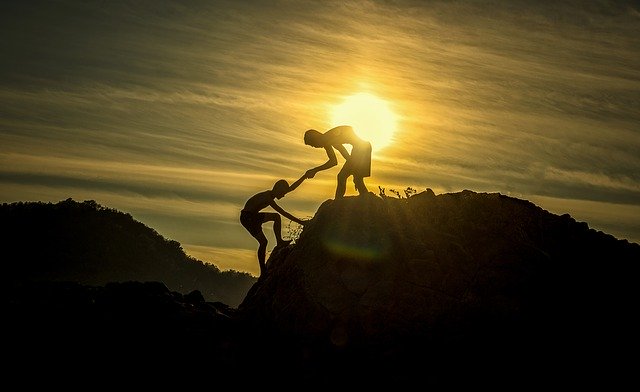
On a human–grown up–level, we can still learn many valuable lessons through analogy of our life and the game of Snakes and Ladders. It reminds us to be aware, especially with regard to our thoughts, speech, and actions; for these are building our character and, thus, creating our destiny. If we allow our life to be driven by our little egoic “i,” we are certain to lose; for a self-centered cannot help anyone win. Such will be a shallow life, to say the least; one lacking the depth and richness that ultimately makes life worth living. To truly win, we are wise to apply ourselves to helping others climb their way to success. In effect we, thereby, become the ladder for their ascension and let our life stand humbly in the background. Sweet idea, isn’t it? Even better lived.

Dare to dream (and care for one another).

With heartfelt regards,

Art

Copyright © – 2020 – R. Arthur Russell

P.S. Please share this article if you enjoyed it. If you’d like to view my latest book (This Taste of Flesh and Bones–released September 8, 2020), press here. May it help you in your spiritual journey. 🙏🙏
“Thank You” & “Note to Publishers”

Bhagavad Gita: Song of The Lord

Bhagavad Gita (Song of the Lord)

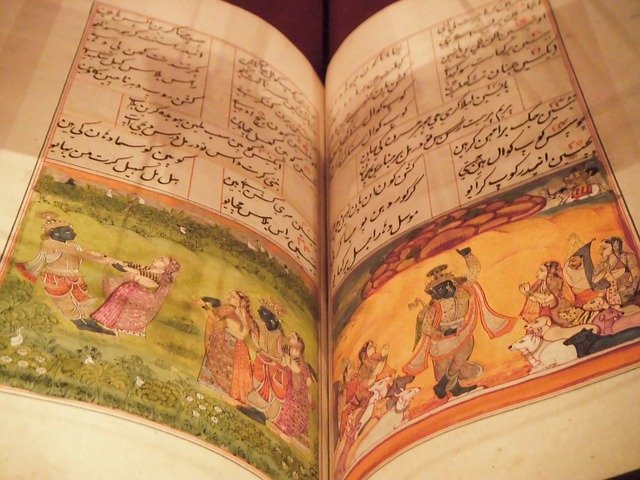
The Bhagavad Gita, which is often translated to mean Song of the Lord, is a Hindu scripture that contains 700 verses and dates back to the second century BCE. It is part of the Mahabharata. It is a narrative tale that is designed to help us discern between the false self (the ego) and our essential nature which is beyond death. The following short passage describes the nature of our authetic Self: “Weapons cannot cut it, nor can fire burn it; water cannot wet it, nor can wind dry it.”

The True Self that is described in that short passage is Spirit, or Consciousness. It is the very foundation of our being. The majority of the masses assume that consciousness is highly personal; for it certainly feels as though there is a personal self confined within the boundaries of our body and mind. Where, though, is that little self? Without any scientific proof to support this claim, most people believe that the brain magically gives rise to the subjective knower of their experience. They believe that this little “i” (referred to by name) somehow came into being with the arrival of the body and, thus, must end with the death of the body. This, however, is a huge assumption; one that can lead to tremendous fear–such as that which we are witnessing with regard to a certain virus.

Could it be that the masses have it backward; and that sages, saints, and rishis from time immemorial are correct? Could it be that your body (which we can only know through consciousness) is actually a product of mind (the creator of everything) and that any concern for the demise of the body-mind is actually fear related to death of an illusion. This–right now–is the illusion. It is, indeed, a dream within a dream. Consciousness (some would call it God) creates objects and worlds and persons through the power of Maya, which is loosely translated as illusion. Human forms are part and parcel of that illusion. What’s Real is the eternal Awareness through which we know our seemingly personal body-mind. There is nothing to fear. If you’d like to learn more about this subject, you might enjoy this presentation by Leo from Actualized.org.

Dare to dream (and care for one another).

With heartfelt regards,

Art

Copyright © – 2020 – R. Arthur Russell

P.S. Please share this article if you enjoyed it. If you’d like to view my latest book (This Taste of Flesh and Bones–released September 8, 2020), press here. May it help you in your spiritual journey. 🙏🙏

“Thank You” & “Note to Publishers”

Truth of The Game

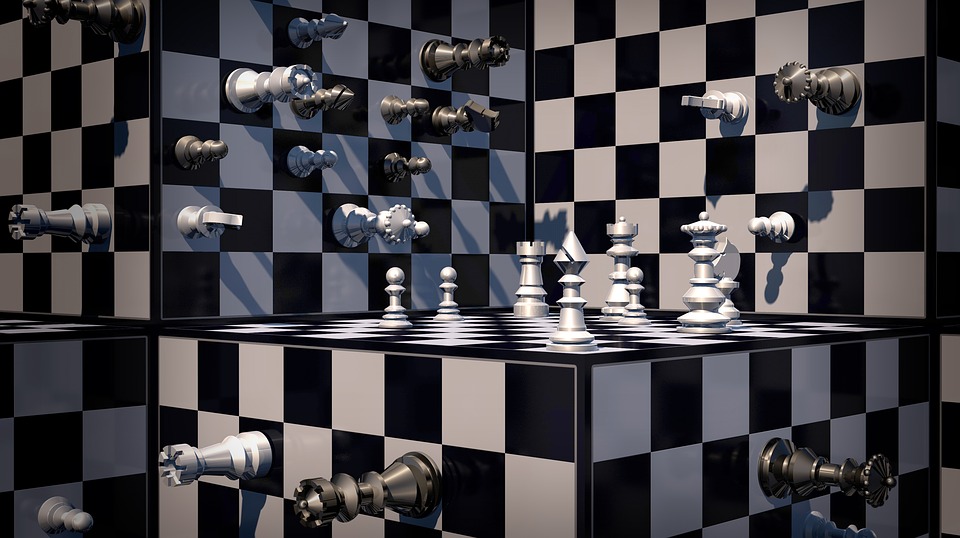
Cube ChessboardThere’s an Italian proverb that reads as follows: “After the game, the king and the pawn go into the same box.” On the surface, we might be tempted to interpret the saying to mean that everyone will end up in a coffin, six feet beneathe the ground we once walked. Although it’s true that our bodies will end up somewhere, the saying points to a deeper understanding that we can know here and now.

During this chess game called “human life,” all of us have played various roles. Some of us have been CEO’s of powerful companies; some of us royalty with a supposedly blue bloodline; some of us plumbers, electricians, or paramedics; some of us lawyers, doctors, or rocket scientists; some of us mother, father, son, or daughter. Now, here’s the truth: We can never–ever–be any of those descriptors.

Why? Because all of those titles are mere labels. Try as you might (if you thought yourself a barber), you can’t cut hair with the word scissors. The word is just an arrangement of letters that won’t cut anything–a pointer for that which it represents. In this case: actual scissors made of stainless steel. This same logic holds true for our names. Despite what society tells us, we can never be an Arthur or a Susie; an Antoine, Maria, or Liam. So much for a name…

The key that unlocks the deeper understanding of the proverb lies in the last four words: “into the same box.” For those readers who may have interpreted “same box” to imply coffin, wouldn’t that make for one heck of a crowded coffin? To understand the true meaning of the proverb requires us to deeply investigate–and recognize–What we actually are That is beyond “who we think we are.” This is often explained through the following analogy:

Gold jewelry comes in various forms–such as bracelets, necklaces, and rings. That’s us, folks–bracelets, necklaces, and rings that go by a variety of names, titles, and desciptors. The jewelry, however, is all formed from one substance–gold. It is one in essence but apparently different in form. Same applies to us: Although we appear as various forms, all of us melt down into one essence which is Consciousness, aka God. That cannot die because it is beyond form; thus, Eternal. The body and the mind are known through Consciousness by Consciousness Itself; not the other way around, as the majority of persons assume.

This game of life could not be played if the One–and only One–did not assume the roles of various pieces and places upon the chessboard. Imagine, if you will, a game of chess in which all of the pieces were dressed as pawns. How would the game ever take place? Roles as such are required in this dimension, but the grievous mistakes occur only when we ignorantly confuse the “role” with our true Self. What’s truly wonderful is that we don’t have to wait for the box to recognize our essential nature! Wishing everyone a great game of chess!

Dare to dream (and care for one another).

With heartfelt regards,

Art

Copyright © – 2020 – R. Arthur Russell

P.S. Please share this article if you enjoyed it. If you’d like to view my latest book (This Taste of Flesh and Bones–released September 8, 2020), press here. May it help you in your spiritual journey. 🙏🙏
“Thank You” & “Note to Publishers”