Snakes and Ladders

When I was a young child, one of the games I used to enjoy playing was a board game called Snakes and Ladders. It’s actually still available to this day. It consists of a board with horizontal squares numbered 1 to 100; beginning in the bottom left corner. The objective of the game is very simple: A player wins by being the first to land his/her gamepiece at the square marked 100. Players take turns rolling a die and advance their gamepiece accordingly. If players land on a ladder, they can scoot upward; conversely, if they land on a snake they must slither downward. So, what’s the point?

What I didn’t realize until recently is that this simple game is based on an ancient board game from India called Moksha Patam. Moksha, for those who may be unfamiliar with the term, means to be liberated from the cycle of birth and death. This occurs through enlightenment; a term which refers to the recognition of True Self (which is Spirit) and, thus, the falsity of the conceptual person. The game was originally intended to help teach basic lessons regarding morality and how to better live with one another. The ladder represents our noble qualities–such as love, compassion, kindness, generosity, and empathy. The snake represents our ignoble instincts–such as lust, greed, anger, selfishness, and hatred.

On a human–grown up–level, we can still learn many valuable lessons through analogy of our life and the game of Snakes and Ladders. It reminds us to be aware, especially with regard to our thoughts, speech, and actions; for these are building our character and, thus, creating our destiny. If we allow our life to be driven by our little egoic “i,” we are certain to lose; for a self-centered cannot help anyone win. Such will be a shallow life, to say the least; one lacking the depth and richness that ultimately makes life worth living. To truly win, we are wise to apply ourselves to helping others climb their way to success. In effect we, thereby, become the ladder for their ascension and let our life stand humbly in the background. Sweet idea, isn’t it? Even better lived.

Dare to dream (and care for one another).

With heartfelt regards,

Art

Copyright © – 2020 – R. Arthur Russell

P.S. Please share this article if you enjoyed it. If you’d like to view my latest book (This Taste of Flesh and Bones–released September 8, 2020), press here. May it help you in your spiritual journey. 🙏🙏

Thank You” & “Note to Publishers

Bhagavad Gita: Song of The Lord

Bhagavad Gita (Song of the Lord)

The Bhagavad Gita, which is often translated to mean Song of the Lord, is a Hindu scripture that contains 700 verses and dates back to the second century BCE. It is part of the Mahabharata. It is a narrative tale that is designed to help us discern between the false self (the ego) and our essential nature which is beyond death. The following short passage describes the nature of our authetic Self: Weapons cannot cut it, nor can fire burn it; water cannot wet it, nor can wind dry it.”

The True Self that is described in that short passage is Spirit, or Consciousness. It is the very foundation of our being. The majority of the masses assume that consciousness is highly personal; for it certainly feels as though there is a personal self confined within the boundaries of our body and mind. Where, though, is that little self? Without any scientific proof to support this claim, most people believe that the brain magically gives rise to the subjective knower of their experience. They believe that this little “i” (referred to by name) somehow came into being with the arrival of the body and, thus, must end with the death of the body. This, however, is a huge assumption; one that can lead to tremendous fear–such as that which we are witnessing with regard to a certain virus.

Could it be that the masses have it backward; and that sages, saints, and rishis from time immemorial are correct? Could it be that your body (which we can only know through consciousness) is actually a product of mind (the creator of everything) and that any concern for the demise of the body-mind is actually fear related to death of an illusion. This–right now–is the illusion. It is, indeed, a dream within a dream. Consciousness (some would call it God) creates objects and worlds and persons through the power of Maya, which is loosely translated as illusion. Human forms are part and parcel of that illusion. What’s Real is the eternal Awareness through which we know our seemingly personal body-mind. There is nothing to fear. If you’d like to learn more about this subject, you might enjoy this presentation by Leo from Actualized.org.

Dare to dream (and care for one another).

With heartfelt regards,

Art

Copyright © – 2020 – R. Arthur Russell

P.S. Please share this article if you enjoyed it. If you’d like to view my latest book (This Taste of Flesh and Bones–released September 8, 2020), press here. May it help you in your spiritual journey. 🙏🙏

Thank You” & “Note to Publishers

Truth of The Game

Cube ChessboardThere’s an Italian proverb that reads as follows: “After the game, the king and the pawn go into the same box.” On the surface, we might be tempted to interpret the saying to mean that everyone will end up in a coffin, six feet beneathe the ground we once walked. Although it’s true that our bodies will end up somewhere, the saying points to a deeper understanding that we can know here and now.

During this chess game called “human life,” all of us have played various roles. Some of us have been CEO’s of powerful companies; some of us royalty with a supposedly blue bloodline; some of us plumbers, electricians, or paramedics; some of us lawyers, doctors, or rocket scientists; some of us mother, father, son, or daughter. Now, here’s the truth: We can never–ever–be any of those descriptors.

Why? Because all of those titles are mere labels. Try as you might (if you thought yourself a barber), you can’t cut hair with the word scissors. The word is just an arrangement of letters that won’t cut anything–a pointer for that which it represents. In this case: actual scissors made of stainless steel. This same logic holds true for our names. Despite what society tells us, we can never ban Arthur or a Susie; an Antoine, Maria, or Liam. So much for a name…

The key that unlocks the deeper understanding of the proverb lies in the last four words: “into the same box.” For those readers who may have interpreted “same box” to imply coffin, wouldn’t that make for one heck of a crowded coffin? To understand the true meaning of the proverb requires us to deeply investigate–and recognize–What we actually are That is beyond “who we think we are.” This is often explained through the following analogy:

Gold jewelry comes in various forms–such as bracelets, necklaces, and rings. That’s us, folks–bracelets, necklaces, and rings that go by a variety of names, titles, and desciptors. The jewelry, however, is all formed from one substance–gold. It is one in essence but apparently different in form. Same applies to us: Although we appear as various forms, all of us melt down into one essence which is Consciousness, aka God. That cannot die because it is beyond form; thus, Eternal. The body and the mind are known through Consciousness by Consciousness Itself; not the other way around, as the majority of persons assume.

This game of life could not be played if the One–and only One–did not assume the roles of various pieces and places upon the chessboard. Imagine, if you will, a game of chess in which all of the pieces were dressed as pawns. How would the game ever take place? Roles as such are required in this dimension, but the grievous mistakes occur only when we ignorantly confuse the “role” with our true Self. What’s truly wonderful is that we don’t have to wait for the box to recognize our essential nature! Wishing everyone a great game of chess!

Dare to dream (and care for one another).

With heartfelt regards,

Art

Copyright © – 2020 – R. Arthur Russell

P.S. Please share this article if you enjoyed it. If you’d like to view my latest book (This Taste of Flesh and Bones–released September 8, 2020), press here. May it help you in your spiritual journey. 🙏🙏

Thank You” & “Note to Publishers

Place Your Reservation

Place Your Reservation

Imagine with me, if you will, that you walk into a fast food restaurant and approach the woman behind the counter. You look her in the eye and innocently say, “Yes, my last name is Smith and I have a reservation for two, at seven thirty. My friend and I would like a table with a view.”  What type of response do you think you would receive? Imagine with me, also, that you visit the beautiful state of Utah. However, instead of appreciating the beauty of it’s amazing vistas and rock formations, that you’re disappointed because you can’t reserve a hotel room with a view of the Pacific! And–you’re probably asking yourself–the point of this?

The point relates to an axiom of the Principle of Correspondence in the Kybalion, a book of ancient wisdom. It states: As Above, so Below; As Below, so Above. Meaning? It means that there is correspondence–or correlation–among the planes of being and life. The three planes– The Physical, Mental, and Spiritual–are not actual planes but arbitrary divisions or degrees in the scale of life. Such divisions are not hard and fast but shade in and out of one another. The Principle of Correspondence is important to understand, for with it, we can–and will–manifest more effectively.

What does this mean, practically? It means that to manifest more effectively we must align ourselves spiritually, mentally, and physically. In the spiritual: We must habitually be whatever we desire. In the mental: we must habitually think of what we desire. In the physical, we must habitually act in ways that reflect what we desire. The three states must align–or correspond–before we’ll experience the manifestation.

Using the analogy of the reservations from the first paragraph, that means that we cannot manifest prosperity by being, thinking, and acting poor. That means that we cannot enjoy health by being, thinking, and acting sick. That means that we cannot enjoy success by being, thinking, and acting failure. To be, think, and act in ways that contradict what we desire–does not make sense; in the same way that seeking a view of the Pacific from Utah does not make sense. You just can’t get that from there.

So, what do we desire? Is it great health, increased wealth, wonderful relationships, or more success? If so, it’s time to place our reservations. How to you do this? Through the powers of our imagination–first. Be it, think it, act it! We must imagine what we desire, and concentrate with patient and detached persistence. By doing so, we’re placing our reservation with the Universe. After that, we have only to remain strong in our faith, and then act upon our intuitive nudges. Law will bring what we desire.

Dare to dream (and care for one another).

With heartfelt regards,

Art

Copyright © – 2020 – R. Arthur Russell

P.S. Please share this article if you enjoyed it. If you’d like to view my latest book (This Taste of Flesh and Bones–released September 8, 2020), press here. May it help you in your spiritual journey. 🙏🙏

Thank You” & “Note to Publishers

The Vegetable Garden

The Vegetable Garden

The deliberate application of the Law of Attraction is about making our dreams come true. The Law of Attraction is about discovering What–not who–we actually are. The Law of Attraction is about thinking, believing, and acting in accordance with divine laws that can–and do!–make what we habitually desire manifest in our lives. The Law of Attraction is about deepening our knowledge, aligning with power, and expressing our potential. Our success can inspire others to reach for their divine potential and, in doing so, reveal the best that is within us to give. With all of the above in mind, I’d like to offer a poem that I wrote when I was a teenager. Is it the deepest or most well-written poem you’ll ever read? No. But does contain a message that I hope will help you continue to reach for your heart’s desires? Yes.

 
 The Vegetable Garden
  
  
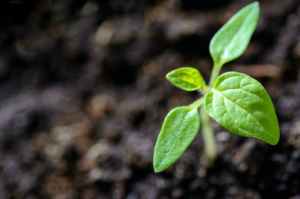
 Into the rich soil of the garden
 Three seeds were sown
 And two weeks later
 Two sprouts had grown.
 The first seed, a pea, was growing fast,
 To soak up the sun, the rain, and be eaten at last.
 The second, a carrot, had sprouted a top,
 And kept on growing until frost made it stop;
 But the third, a potato, was
 Afraid to get burned,
 Afraid to get wet,
 Afraid to grow up,
 Afraid to pass on,
 And as nature took its course,
 The potato, whether willing or not,
 Lay safe in the earth but starting to rot.
  
 - R. Arthur Russell - 

Everyone of us has vast untapped potential. It is our birthright, for it’s what we are. That potential is not there by accident–there are no accidents. That we exist proves that we have purpose. A clue to discovering that greatness within us is to examine what we love to do. To what dream–not “idle wish” (borrowed from “As A Man Thinketh,” by James Allen) would you devote uncounted hours lost in glorious amazement of Divine creation? What makes your heart thrill, your body electrify, your Being sing with delight? Find that answer, and when you do embrace it tightly. Hold it for dear life. Be not afraid to shout, “This is my dream!” Trust. Give of yourself. Believe that the achievement of your dream is not only possible, but already accomplished, and watch it manifest through continued faith and action.

Dare to dream (and care for one another).

With heartfelt regards,

Art

Copyright © – 2020 – R. Arthur Russell

P.S. Please share this article if you enjoyed it. If you’d like to view my latest book (This Taste of Flesh and Bones–released September 8, 2020), press here. May it help you in your spiritual journey. 🙏🙏

Thank You” & “Note to Publishers

An Interview With Fear

red hoodie

Clutching my thin briefcase, I tentatively entered the large room, which was ornately paneled with dark wood. Four dim-lighted sconces on the front wall were the only source of light. As I stepped forward, I heard the door close behind me, followed by the soft click of a turning key. The room had a high ceiling and an echo-like empty feel to it. I walked forward and stopped in front of an immense oak desk that was centered on a raised platform. A person would have had to climb stairs to sit behind it. I looked up, but I couldn’t see anyone.

“Mr. Doe?” came a resonant voice.

“Yes,” I replied. “John Doe.”

“I understand that you’re here to apply for the position of Fear Specialist.”

“Yes,” I replied.

“What makes you think you’re qualified for the position? We don’t hire just anyone, you know.”

“Well,” I replied, as I attempted to hand my resume upward to the voice above me, if you’ll take a look…”

“Just give me the highlights,” said the voice.

“Well, I’m quite familiar with fear, so I can well relate. When I was four, I was afraid of the boogeyman–so scared that I occasionally peed the bed. When I was eight, I was afraid of getting a few scrapes when I was learning to ride my bike. I cried more than a few times. And when I was a teenager, I was so afraid of being rejected by the in-crowd that I turned against myself to be accepted.”

“Nice,” said the voice, “that’s a good start. But what have you done recently?”

I flipped to the second page of my resume and scanned down the lines. “Well, during the last several years,” I said, “I’ve dwelt upon as much bad news as I possibly can. I’m mesmerized by it. As a result, I’ve endured a lot of fear and a tremendous degree of mental anguish. I’m quite familiar with the coverage of war, terrorism, and violence of various sorts.”

“Very nice,” said the voice. I imagined it smiling, if such could be possible. “You may be just the man we’re seeking.”

Inwardly, I smiled. How I needed the job. I slid my resume back into my briefcase.

“What are you willing to do to fit into our organization?”

“Almost anything,” I said, but as soon as the words exited my mouth I felt a twinge stab through me.

“Bow,” said the voice. It was a command, not a question.

“Pardon me,” I said. “What did you say?”

“I said ‘bow.’ The voice was harsh now. “Do it now, or this interview is over. There are plenty more like you that are eager for an interview.”

Time stood still as the realization of what I was being asked–no told!–to do settled within me. A cold shiver ran down my legs. Was this a nightmare? What price was I willing to pay to get the job? From somewhere deep within me, I felt the warm wellspring of holy power rise within me. It felt glorious, a power that was beyond any fear related to humankind. I need not bow. I would not bow.

A few moments later, as I felt that power surge within my being, I turned my back to the courtroom and marched proudly toward the door. “Come back, come back!” cried the angry voice; but I refused to turn. The door opened easily, and as I stepped toward the light, I felt the building collapse into a heap of ruble. For the first time in years, I knew I was free.

***

Dear Readers: Natural fear that’s meant to protect us from danger is very good indeed; and we’re wise to heed it. But when fear becomes a constant in our lives, it can rob us of so much joy. Abnormal fear is associated with the perspective of the false self–the “person” who we think we are. If fear is attempting to rule your life, perhaps you would benefit from self inquiry. Asking “Who am I?” is a good place to begin. You might also find my YouTube video entitled “Finding Your Way Home” helpful.

Dare to dream (and care for one another).

With heartfelt regards,

Art

Copyright © – 2020 – R. Arthur Russell

P.S. Please share this article if you enjoyed it. If you’d like to view my latest book (This Taste of Flesh and Bones), press here. My YouTube videos can be found at Think2wice@I-Am-Aware. May the content of either or both help you along your spiritual journey. Thank You” & “Note to Publishers 🙏🏻🧡

Breaking The Mold

Pablo The Brickmaker5

Imagine this: Pablo The Brickmaker has a mold for bricks that is this long, this wide, and this high. He’s been using it for years. As long as he mixes the clay in the same manner, fills the mold in the same manner, and subjects the bricks to the same temperature for the same amount of time, he gets the same results. Always. His success at making bricks is founded upon the application of this knowledge. The process is as predictable as night following day, and day the night.

The point? That, likewise, the results we experience are shaped by the subconscious paradigms (or molds) that we’ve formed or acquired during the course of our life. From Merriam-Webster’s Dictionary, a definition of paradigm: example, pattern, especially an outstandingly clear or typical archetype. Subconscious patterns are basically a collection of beliefs that we hold to be true. Whether these beliefs are actually true is irrelevant to the subconscious mind; for it always blindly accepts the information it receives. It does this twenty-four hours a day, without rest, every day of our life. If we habitually repeat I’m an idiot, it’s highly unlikely that we’ll ever receive the highest marks in the class. If we habitually repeat I’m such a klutz, it’s, likewise, unlikely that we’ll become the most coordinated athlete. And we shouldn’t be surprised to find ourselves overweight if we’re habitually thinking and saying I’m so fat. The mental pattern is formed first; the physical manifestation appears afterward.

So, how do we change our results? By deliberately changing our subconscious patterns. We do this by displacing negative beliefs with positive ones; limiting with empowering.  And: It’s vitally important to affirm what we desire; not what we don’t. We must be clear with our thinking. For example: Saying I’m not overweight, is not the same as stating I’m at a perfect weight for my height. In the first case, we’re actually drawing attention to what we don’t desire to manifest; thereby making the existing pattern stronger. We must also realize that it’s not enough that we know certain knowledge; we must apply it! Until we do, the results that manifest will–according to law–remain the same. How could they not? Would that not be akin to asking a corn seed to bear a potato? Or a pea seed to yield a cabbage? Our results will change when we change our paradigms, not before. This basically means that we must think in a different way; speak in a different way; and act in a different way. A worthwhile pursuit? If doubtful, we could ask Pablo what he’d have to do to create a different brick.

Dare to dream (and care for one another).

With heartfelt regards,

Art

Copyright © – 2020 – R. Arthur Russell

P.S. Please share this article if you enjoyed it. If you’d like to view my latest book (This Taste of Flesh and Bones–released September 8, 2020), press here. May it help you in your spiritual journey. 🙏🙏

Thank You” & “Note to Publishers

Preemptive Strikes

Preemptive Strike

Most of us, unfortunately, will be familiar with the term preemptive strike, which is usually used in the context of war. From Wikipedia, its basic definition is as follows: A surprise attack launched with the stated intention of countering an anticipated enemy offensive. In theory, the first to strike will gain an advantage, likely by catching the enemy off guard or unprepared.

As this relates to the Law of Attraction, a preemptive strike is not against an enemy but against ourselves and our goals! In many cases, the action reveals hidden fears or subconscious beliefs of unworthiness, rather than any real reason why our goals can’t be achieved! This covert operation is often habitual, a mechanism related to memories of past goals attempted without success. It works thus: Instead of allowing our goal to manifest, through intuitive guidance toward action required, we unconsciously defeat it with our negative thinking. Once again, this type of mentality offers proof that we bring about what we think about! It is destructive in nature, not constructive. This is the strike; the attack against our own aspirations.

Why, though, would our mind attack a goal that could potentially enrich our life? Because a new goal requires us to shift out of our comfort zone, and that can be a terrifying experience! In fact, many motivational speakers claim that if a goal doesn’t scare us a little that it’s probably not big enough! When the mind strikes down a goal, we may temporarily feel some relief, just to have the matter settled. However, in the quiet hours of the soul we realize what’s being sacrificed.

Regarding preemptive strikes in war, who would know the best action to be taken? This, however, is certain regarding the achievement of our goals: Unless we remain open to possibilities, we doom our dreams. The mind that’s launching preemptive strikes would have us believe that it’s being of benefit; that it’s protecting us from painful future experiences. But such a mentality negates the value of lessons learned from attempting in the first place! It’s actually sabotaging our dreams before they’ve been given a chance.

How do we counter such attacks? By recognizing them for the enemy they are! By questioning their validity and, if appropriate, refusing to accept that our goal can’t be achieved just because we don’t know the way now! Such requires patience, persistence, insight, faith, and action! The subconscious will undoubtedly attempt to convince us to be realistic; to accept that some people are lucky and some not. The truth, however, is that luck has nothing to do with it.

Dare to dream (and care for one another).

With heartfelt regards,

Art

Copyright © – 2020 – R. Arthur Russell

P.S. Please share this article if you enjoyed it. If you’d like to view my latest book (This Taste of Flesh and Bones), press here. My YouTube videos can be found at Think2wice@I-Am-Aware. May the content of either or both help you along your spiritual journey. Thank You” & “Note to Publishers 🙏🏻🧡

The Way of Trust

the-way-of-trust

All of us bring attitudes to the situations of our life. Some situations we may label as good; some we may label as bad; some perhaps a mixture of both. Whatever the case, it’s unavoidable that we will bring our habitual thoughts and feelings with us. However, for the sake of manifesting the best of life, let’s share a perspective that may help us greatly.

We dream of the way we’d like life to be. We want this, that, or the other thing. We want a relationship to be just so; our career to happen this way but not that; travel to unfold according to our expectations; and solutions to arrive on our schedule. Alas, this is often not the case. Life surprises us, shocks us, knocks us, confuses us, and downright rebels against our most valiant efforts. However…

What if we adjusted ourselves–and our beliefs–to life; rather than expecting life to adjust to us. Would there be a benefit? Could we actually find ourselves flowing with the tide of life, rather than against it? The undeniable and unequivocal answer is yes! Could we arrive at a state of Being–deep within ourselves–in which we accept every moment as it is? And could we adopt the belief that life is always working in our favour, even if at first glance it appears otherwise?

Think: As life is always changing, is it safe to say that we never truly arrive? Is not every moment merely a stepping stone to the next? Can a supposed arrival ever truly be static? And with this knowledge, may we conclude that the outcome we have desired–which has not yet appeared–doesn’t have to be labelled as disappointment? Could the fulfillment of our desire still be on its way? Or could that which didn’t occur, still turn out to be for the best? And could we, thus, learn invaluable lessons?

To live in this manner is to live by the way of trust. We may believe that whatever happens in life–the loss of a recent relationship; the end of a business venture; an unexpected displacement from the workplace–is in our best interest. From our limited and small perspective, we so often assume that we know best. The truth, however, is that life’s detours often yield the best results…and the greatest joy!

Dare to dream (and care for one another).

With heartfelt regards,

Art

Copyright © – 2020 – R. Arthur Russell

P.S. Please share this article if you enjoyed it. If you’d like to view my latest book (This Taste of Flesh and Bones–released September 8, 2020), press here. May it help you in your spiritual journey. 🙏🙏

Thank You” & “Note to Publishers

To Think Deliberately

to-think-deliberately

Eckhart Tolle is one of the most influential spiritual teachers of our time. In the last several years, he has risen to prominence not only for his books, which include The Power of Now and A New Earth, but also for his television spiritual retreats. Although he has great wisdom to share about our essential nature, he’s also skilled at teaching us the art of deliberate thinking.

Many persons may wonder if deliberate thinking is, indeed, possible; but that’s likely because they’ve never attempted it. For most people, thoughts just occur; most often in a random and repetitive manner. As a consequence, their lives often that lack of deliberate intention.

Some experts believe that it’s impossible to know what our next thoughts will bewe cannot possibly know what our next thoughts will be; that we are not, in fact, capable of producing them. This may or may not be true; but through deliberate effort, we can at least attune ourselves to the nature of thoughts we receive. In one presentation, Eckhart likened the process to the following:

Imagine that you’re sitting on a park bench, with no agenda in mind except to enjoy time in nature. A few minutes pass by, but then a dog runs into our field of vision. It sniffs the ground in one location; paws the earth at a second; stops to urinate at a third. The dog moves on and on. In this example, the dog, of course, is analogous to our thinking process. Must we follow that dog and focus on it exclusively, merely because it entered our awareness? If we answered “yes,” we’re training ourselves to be the slave–not the master–of every other dog (thought) that enters our mind. Negative “dogs” lead to more thoughts of a similar nature, as though connected by an invisible leash. Fortunately, the same is true of positive thoughts.

What does this mean in practical terms? That we can choose not to follow painful thoughts related to our ex spouse, business deals that failed, or financial worries. That we can choose not to focus on relationship thoughts that cause stress, worry, or concern. We’re not being negligent when we choose not to do so; we’re actually nurturing a better state of mind. And we may remind ourselves just who gives importance, relevance, and meaning to all of our thoughts and experiences. We hold the scepter of opinion–not the thoughts.

With practice, we may train ourselves to follow only thoughts that we wish to entertain. There are also times when we will choose not to think; to remain in the bliss of present awareness without engaging the thinking process. We may also liken thinking to our arms or legs: Just because we have them, must they always be in motion? No, they may be at rest; and the same is true of our mind. If we have nothing good to think, we may choose not to engage negative thinking just to fill time. Such, in fact, will benefit us greatly.

Dare to dream (and care for one another).

With heartfelt regards,

Art

Copyright © – 2020 – R. Arthur Russell

P.S. Please share this article if you enjoyed it. If you’d like to view my latest book (This Taste of Flesh and Bones), press here. My YouTube videos can be found at Think2wice@I-Am-Aware. May the content of either or both help you along your spiritual journey. Thank You” & “Note to Publishers 🙏🏻🧡